Oxford Diecast De Havilland DH.82 Tiger Moth Floatplane, T7187, Royal Navy, 1:72 Scale Model (72TM009)
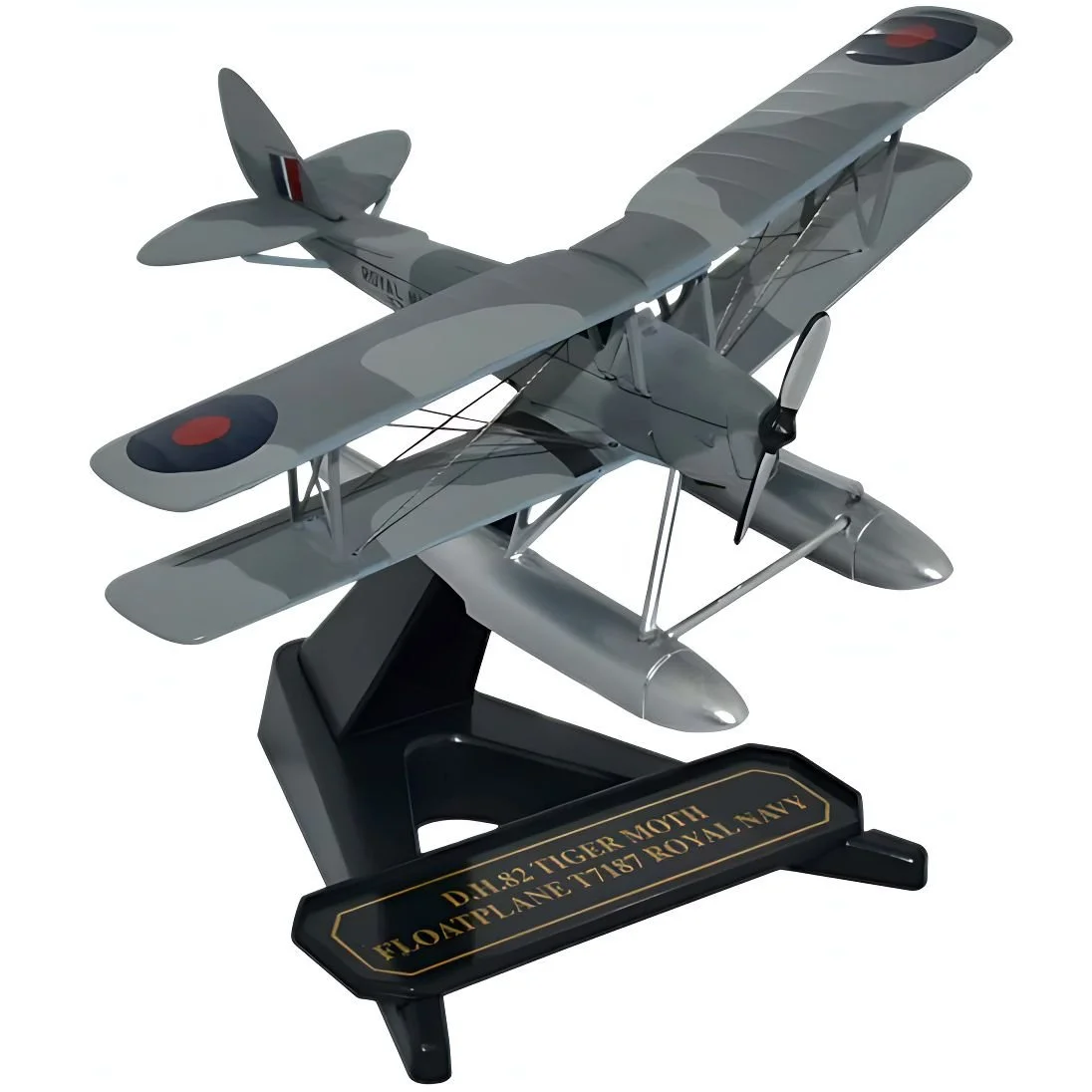
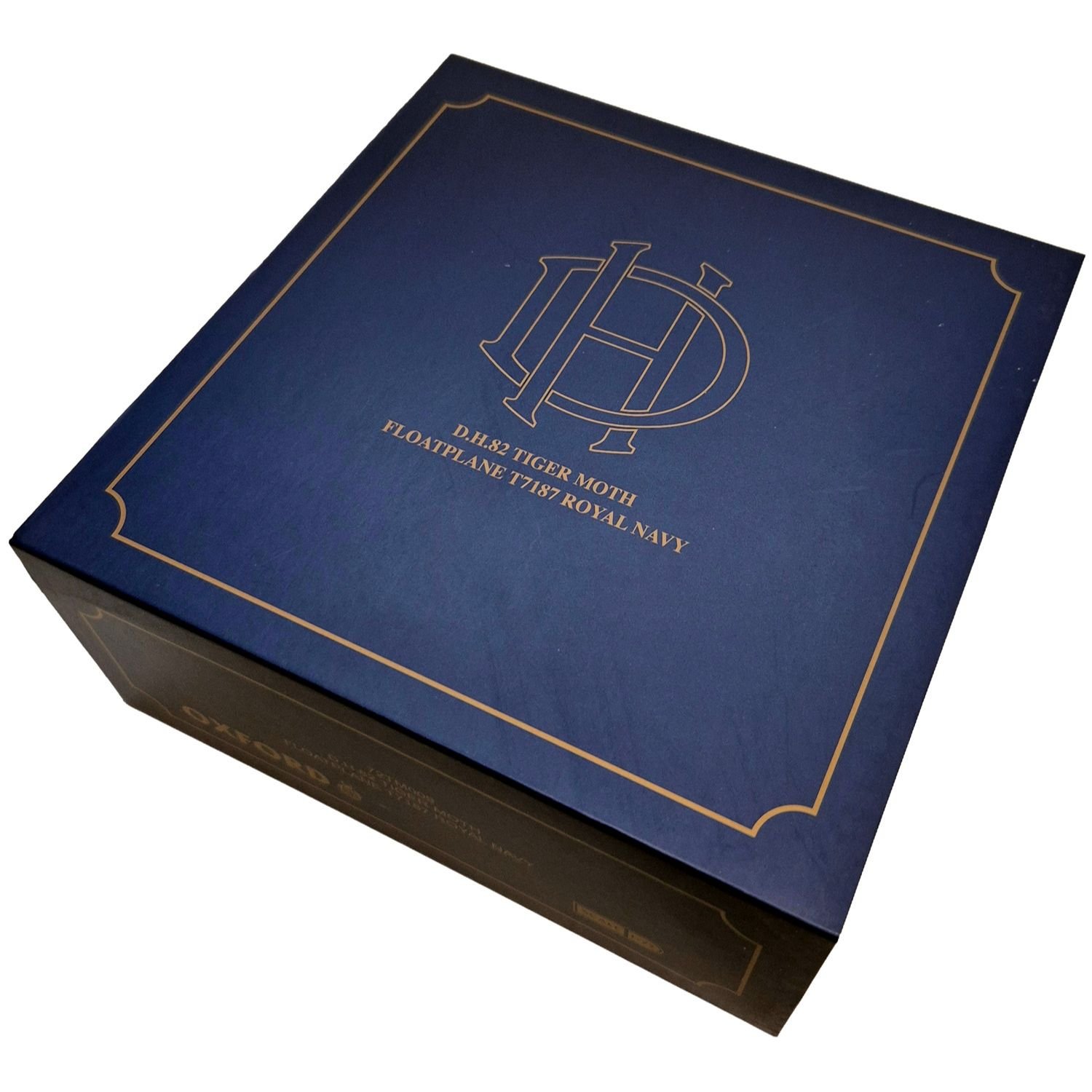
Oxford Diecast De Havilland DH.82 Tiger Moth Floatplane, T7187, Royal Navy, 1:72 Scale Model (72TM009)
Oxford Diecast De Havilland DH.82 Tiger Moth Floatplane, T7187, Royal Navy
1:72 Scale Diecast and Plastic Model
Dimensions (approx):
11cm x 10.5cm x 12.5cm (4.3 x 4.1 x 4.9 inches)
New, Unopened model. Box may have a few scuffs and marks from storage.
The DH 82 Tiger Moth bi-plane, designed by Geoffrey de Havilland, took to the skies in 1931 and operated chiefly by the RAF, lasted in service into the early 1950s. Our 1:72 scale replica comes with a tooling modification to include floats for landing on water. It is this version that we have chosen for our latest release as flown by the Royal Navy.
Decorated in a marine camouflage of mid and dark grey with pale blue underwings, our model is numbered T7187, which appears in black on both the wings and the fuselage, together with the RAF roundel. The floats and float struts are finished in silver. The open cockpit is moulded in muted green and other finite details include black propeller blades and spinner tips as well as black tyres, wing walkways, exhaust pipes and tail skid.
The de Havilland DH.82 Tiger Moth is a iconic 1930s British biplane primarily used as a military and civilian primary trainer aircraft. Designed by Geoffrey de Havilland, it played a crucial role in the British Commonwealth Air Training Plan during World War II.
Primary Trainer:
The Tiger Moth became the standard elementary trainer for the Royal Air Force (RAF) and many other air forces, known for being generally docile in normal flight but requiring skill for aerobatics, which helped "weed out" inept student pilots.
Design: It features a single engine, biplane configuration, and two open cockpits in tandem. A key design element was moving the upper wing forward and sweeping the wings back to improve access to the front cockpit for easier escape with a parachute.
Wartime Roles:
Besides training, the aircraft was adapted for various roles during WWII, including maritime surveillance (known as "scarecrow patrols"), air ambulance, and even experiments as a light bomber and an anti-parachutist "paraslasher".
Postwar Popularity:
After the war, thousands of surplus aircraft were sold into civilian operation and remain popular today for recreational flying, aerobatics, and trial flight experiences due to their inexpensive operation and classic appearance.
Production:
Over 8,800 Tiger Moths were built between 1931 and 1944 in the UK, Canada, Australia, New Zealand, and other countries.
Free UK Shipping
In Stock - Usually dispatched in 24 hours.
This Item can usually be delivered on the next working day in the UK
If you require any further assistance or would prefer to order by telephone please call us on:
01234 266711
We are open Monday - Friday 9.00am - 5.30pm, Saturdays 9.00am - 5.00pm